Ten priorities for safeguarding cost effective, sustainable vehicle repair in Europe
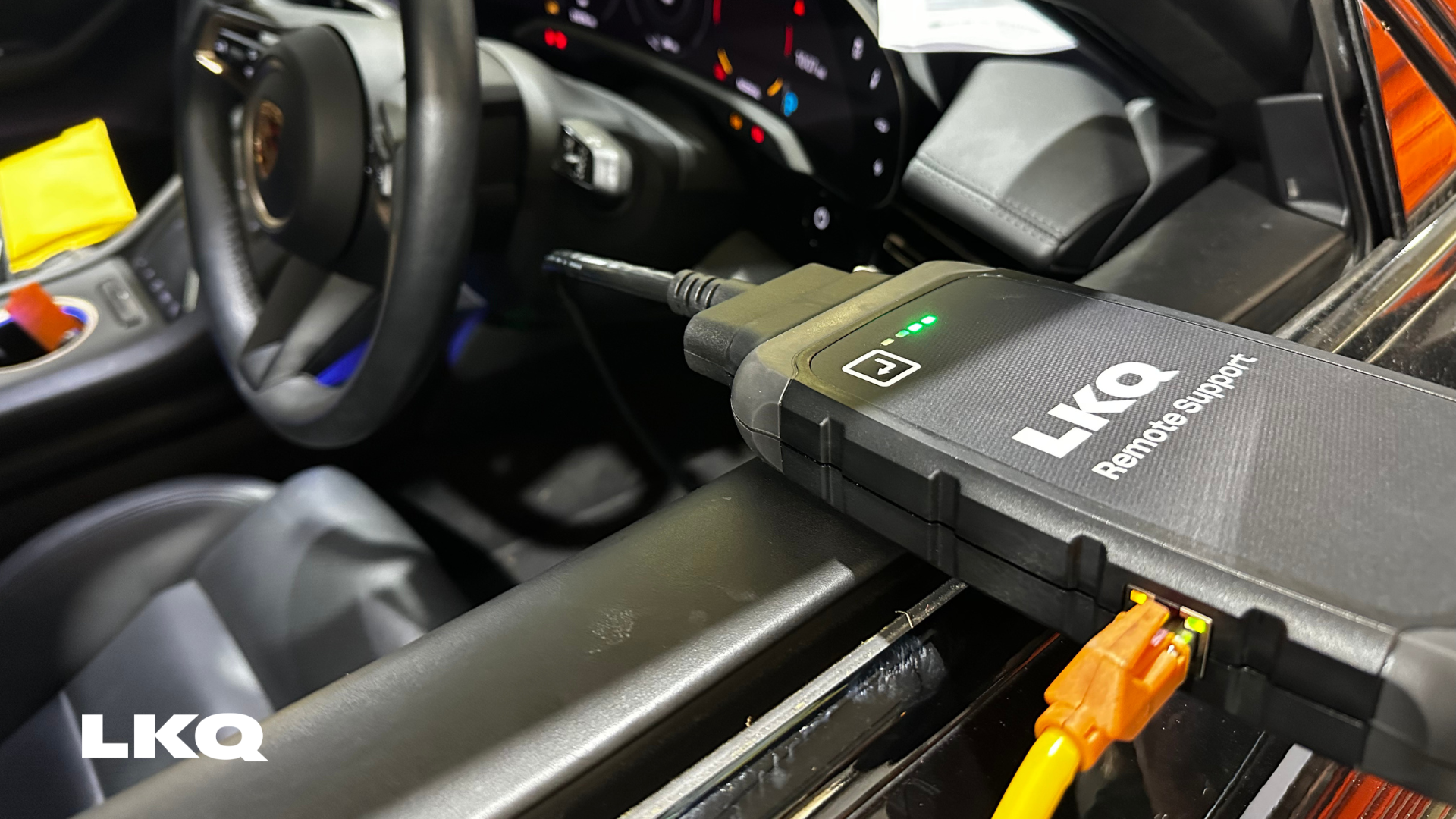
Cost effective, sustainable vehicle repair in Europe depends on scaling repair-first decisions, recycled OE parts, remanufactured components, EV battery repair, technician training and practical access to vehicle data. These priorities, drawn from LKQ Europe’s latest whitepaper, set out how insurers, workshops, parts distributors, dismantlers, OEMs and policymakers can keep repair viable while reducing waste and emissions.
Key insights from our latest whitepaper:
- The cost effectiveness of repair depends on better access to circular parts, repair data and skilled technicians.
- Recycled OE and remanufactured parts can help reduce waste and ease cost pressure when supported by traceability, grading and warranty standards.
- EV battery diagnostics, repair and remanufacturing will become increasingly important as electrification grows across Europe.
The whitepaper notes that parts typically account for 40–55% of total repair costs in many European markets, meaning parts choice has a significant influence on the cost effectiveness of repair.
Download the whitepaper, Click HERE.
The following ten priorities provide a practical framework for scaling circular, lower-carbon repair across Europe - from recycled OE and remanufactured parts, traceability and data access, to EV battery repair, technician skills, practical regulation and stronger collaboration across the repair ecosystem.
1. How can cost effective and sustainable vehicle repair be aligned?
Cost efficiency and sustainability must be treated as a single goal, not competing agendas.
Repair needs to remain economically viable for motorists, insurers and workshops and circular economy initiatives should reduce cost pressures (through reuse, repair and remanufacture) rather than add to them.
Sustainable vehicle repair will only scale if it supports cost efficiency, improves availability and reduces downtime.
Industry analysis cited in our whitepaper shows that remanufactured and reused OE parts can cost 30–60% less than new OEM dealer components, depending on the category. It also notes that remanufacturing can preserve 70–85% of the original material by weight and reduce energy consumption by up to 80% compared with producing a new component.
2. How can recycled OE and remanufactured parts scale in vehicle repair?
Recycled OE and remanufactured parts cannot remain secondary options.
Scaling their use depends on consistent availability, predictable delivery and integration into standard repair workflows.
This is what turns circular parts into a reliable, mainstream option for everyday repair.
3. What builds confidence in recycled OE and remanufactured parts?
Adoption is ultimately a question of trust and accountability. Confidence in recycled OE and remanufactured parts increases when the market can rely on:
- Standardized grading and quality frameworks
- VIN-level and OE-number traceability, helping identify the right part and right fit
- Warranty parity with new components, where feasible
- Consistent documentation and imagery to support decision-making
This is essential for both insurers and repairers when making repair versus replace decisions.
The table below summarizes how different repair options support sustainable repair and what is needed to scale them.
Option | Role in sustainable repair | What is needed to scale |
| Recycled OE parts | Reuse original equipment parts from end-of-life vehicles | Grading, imagery, traceability, availability |
| Remanufactured parts | Restore used components to reliable working condition | Core supply, quality standards, warranties |
| Repaired components | Extend the life of existing parts, including batteries | Diagnostics, skills, repair pathways |
| New parts | Remain essential where repair or reuse is not viable | Clear criteria for when replacement is needed |
4. Why is access to vehicle and parts data so critical?
Efficient repair depends on structured access to vehicle and parts data. Without it, complexity increases, repair times extend and system-wide costs rise. Practical access to repair, diagnostic and parts data is therefore essential to keeping repairs viable and reducing avoidable delays.
5. How can Europe scale EV diagnostics, battery repair and remanufacturing?
Electrification is advancing unevenly across Europe, but it will continue to reshape the repair landscape. The whitepaper notes that across the EU, EFTA and UK, almost two-thirds of new cars sold in 2025 featured some form of electrification, including battery electric, plug-in hybrid or hybrid vehicles.
Workshops need practical routes for high-voltage safety, EV battery diagnostics, battery repair and remanufacturing.
Specialist hubs, partnered networks and “repair pathways” will be vital to bridge capability gaps as EV volumes grow.
6. How can the aftermarket close the EV and hybrid repair skills gap?
The shortage of skilled technicians, particularly in EV and hybrid repair risks becoming a bottleneck. Closing the gap requires coordinated investment in training, stronger partnerships and more consistent qualification frameworks across markets.
This includes practical training on EV diagnostics, high-voltage safety, battery repair and the use of recycled OE and remanufactured parts in everyday repair workflows.
Our whitepaper highlights that LKQ Europe has committed to upskilling 24,000 technicians across 11 European countries by 2028, with training covering EV diagnostics, high-voltage safety, de-energizing procedures and repair standards aligned with European requirements.
7. How can integrated salvage, remanufacturing and repair improve outcomes?
Fragmentation across salvage, remanufacturing and repair continues to limit efficiency and scale.
More integrated models supported by shared inventory networks, coordinated core supply for remanufacturing, cross-border logistics and network cooperation can improve availability and strengthen the economics of reuse.
8. How can EU policy support cost effective, sustainable vehicle repair?
Regulation will continue to shape the aftermarket but it must remain commercially and operationally viable.
Policy can better support cost effective, sustainable repair by enabling practical access to repair and diagnostic data, clear standards for reuse and frameworks that accelerate circularity without pushing up total repair costs.
A practical policy framework should support repair-first decisions, fair competition, data access and the safe, trusted use of recycled OE and remanufactured parts.
9. How can repair-first decisions reduce total loss rates and vehicle waste?
Rising parts costs and increasing vehicle complexity are driving higher total loss rates. A repair-first approach needs access to alternative parts and battery repair capability so the industry can extend vehicle lifecycles, reduce unnecessary waste and avoid writing off vehicles that could otherwise be repaired.
10. What will determine whether sustainable repair scales?
Trust across the repair ecosystem remains the defining factor.
This applies between insurers and workshops, dismantlers and distributors, and policymakers and operators. Transparency, data sharing and consistent standards will determine whether sustainable repair becomes mainstream.
The future of vehicle repair will not be defined by a single innovation. It will be shaped by coordinated progress across these priorities - connecting repair, reuse, recycled OE and remanufactured parts into one scalable system that improves availability, reduces environmental impact and keeps mobility accessible.