How Europe’s workshops can adapt to rising repair costs and EV complexity
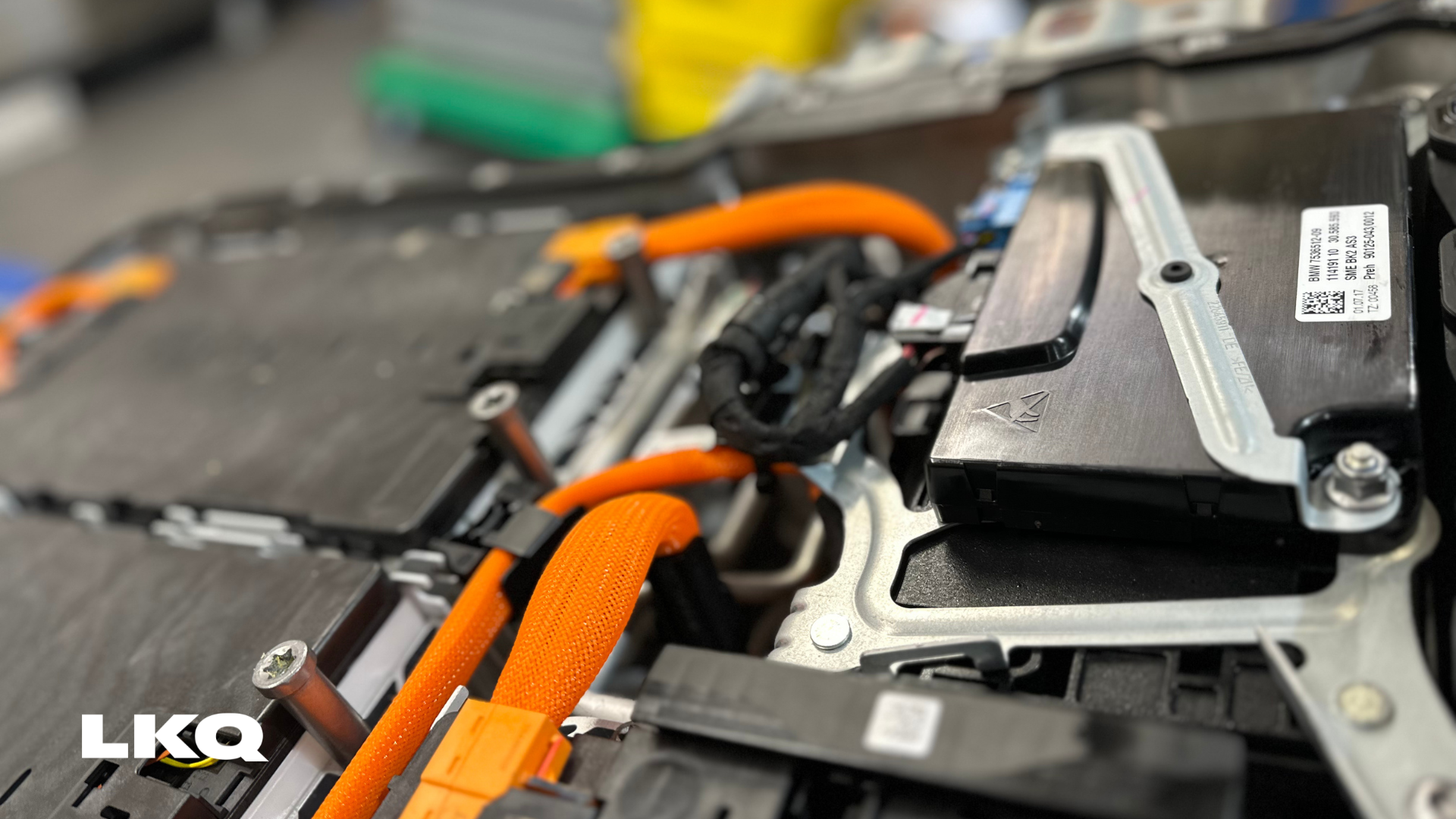
Europe’s independent workshops can adapt to rising repair costs and EV complexity by protecting workshop productivity, improving parts planning, building EV capability in stages and using a wider mix of new, recycled OE and remanufactured parts where appropriate.
This article draws on LKQ Europe’s latest whitepaper on safeguarding cost effective, sustainable vehicle repair in Europe, and looks at what its recommendations mean in practice for independent garages and workshops
European vehicle repair is changing fast, and workshops are feeling the pressure first.
Parts prices have risen steadily, vehicles are more electronic and software-led, and EV and hybrid volumes are growing unevenly across markets.
For independent workshops, the practical challenge is staying cost-effective and resilient, protecting productivity, managing complexity safely and keeping repairs viable for customers and insurers.
This isn’t a reinvention of the workshop model, it’s a shift in how workshops manage time, parts choice and capability.
At a glance, workshops can build resilience by focusing on three practical areas:
- Protecting productivity by reducing avoidable downtime
- Building EV repair capability in stages
- Using a wider mix of parts pathways, including recycled OE and remanufactured parts where appropriate
Challenge for workshops | Practical response |
| Rising repair costs | Improve parts planning, reduce returns and use the right part pathway for each job |
| EV and hybrid complexity | Build capability in stages, starting with safety, triage and routine service competence |
| Avoidable downtime | Confirm availability, kit parts properly and standardize post-repair checks |
| Parts uncertainty | Use suppliers with traceability, warranty clarity and reliable identification |
| Skills pressure | Invest in training and use specialist partners for complex EV battery work |
Why is cost-effective vehicle repair about process, not just parts prices?
Our whitepaper notes that parts typically account for 40–55% of total repair costs in many European markets, meaning parts choice has a significant influence on the cost effectiveness of repair.
Late deliveries, incorrect variants or incomplete parts shipments extend downtime and increase labor time. For workshops operating to tight schedules, those inefficiencies can outweigh the saving on any individual component.
A cost-effective, resilient workshop model is built on:
- Predictable availability and delivery
- First-time parts identification and fitment
- Fewer returns and fewer repeat jobs
- Reduced avoidable downtime to protect workshop productivity
How can workshops reduce avoidable downtime and protect productivity?
Workshop margin is still built on technician hours converted into completed jobs, however rising complexity increases the number of ways a job can stall.
The practical response is to run a tighter operating rhythm which includes fewer vehicles started without confirmed parts availability, more disciplined kitting and completeness checks for common jobs and standardized steps for calibration, coding and post-repair checks.
This is not about working harder, it is about reducing friction and protecting job completion rate.
How can independent workshops build EV repair capability in stages?
Electrification is real, but it is not uniform and workshops do not need to become EV specialists overnight to remain resilient.
A staged approach is more sustainable:
- Safety and triage: high-voltage awareness, depowering procedures and clear rules on what work can be accepted
- Core service competence: brakes, suspension, thermal management, 12V systems and routine diagnostics on EVs and hybrids
- Specialist pathways: trusted partners for high-voltage battery diagnostics, repair and remanufacturing where appropriate
This reduces risk, protects productivity and allows capability to scale with demand.
How can recycled OE and remanufactured parts support cost-effective repair?
As repair costs rise, workshops need access to a broader mix of parts pathways to keep repairs cost-effective and resilient.
That includes new parts, but also professionally sourced remanufactured and recycled OE components where available. The point is not simply price, it is maintaining repair viability when replacement costs become disproportionate.
For workshops, the practical requirement is consistency:
- Reliable availability
- Predictable lead times
- Clear warranty position
- Confidence in identification and fitment
Where alternative parts behave like a dependable supply channel, they can become routine rather than exceptional.
Industry analysis cited in our whitepaper shows that remanufactured and reused OE parts can cost 30–60% less than new OEM dealer components, depending on the category. It also notes that remanufacturing can preserve 70–85% of the original material by weight and reduce energy consumption by up to 80% compared with producing a new component
What will define resilient workshops in Europe’s aftermarket?
The direction of travel is clear, repair will be more data-driven, more safety-sensitive and more dependent on predictable supply.
For workshops, the next phase will be defined by the ability to turn complexity into repeatable processes – using better parts planning, staged EV capability and trusted supply routes to keep repairs moving.
Europe’s aftermarket has always been good at adaptation and the workshops that thrive in the next phase will be the ones that turn complexity into process and cost pressure into operational discipline.